

Introduction
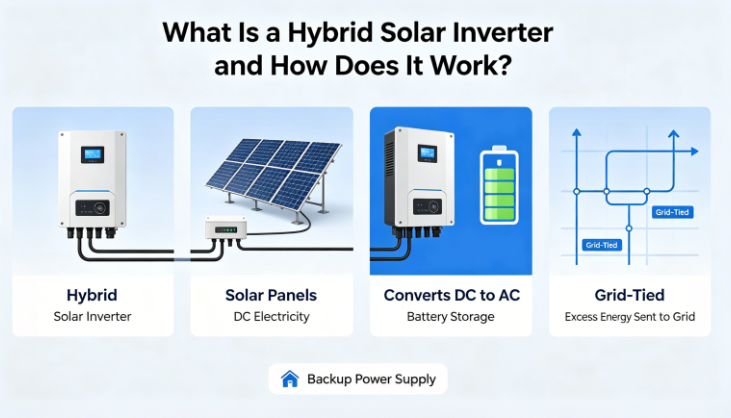
As solar energy systems become more popular, hybrid solar inverters are increasingly used in both residential and commercial applications. But what exactly is a hybrid solar inverter, and how does it work?
This article explains the working principle, advantages, and applications of hybrid solar inverters.
1. What Is a Hybrid Solar Inverter?
A hybrid solar inverter is a multi-functional device that combines the features of:
-
On-grid inverter
-
Off-grid inverter
-
Battery charger
It can manage power from solar panels, batteries, and the utility grid at the same time.
2. How Does a Hybrid Solar Inverter Work?
A hybrid inverter automatically decides where electricity should come from based on system conditions:
-
Daytime: Solar power supplies loads and charges batteries
-
Night: Batteries supply power
-
Grid outage: System switches to backup mode
-
Grid available: Excess solar energy can be exported
This intelligent power management improves energy efficiency and reliability.
3. Key Advantages of Hybrid Solar Inverters
-
Backup power during outages
-
Reduced electricity bills
-
Battery-ready for future expansion
-
Flexible system design
4. Typical Applications
-
Residential homes
-
Small businesses
-
Areas with unstable grid supply
Hybrid inverters are especially suitable for users who want energy independence and security.
FAQ
Q: Can a hybrid inverter work without batteries?
A: Yes, it can operate as a grid-tied inverter and add batteries later.
Q: Is a hybrid inverter more expensive?
A: Initial cost is slightly higher, but long-term savings are better.
CTA
👉 Looking for a reliable hybrid solar inverter? Aninerel provides high-quality hybrid inverter solutions with professional support.